Joe Hisaishi Kikujiro Summer [new]

While Joe Hisaishi is synonymous with the epic, fantasy-laden worlds of Studio Ghibli ( Spirited Away , My Neighbor Totoro ), “Summer” stands as a unique, minimalist masterpiece in his discography. It is a piece that requires no knowledge of Japanese cinema to understand, yet it captures the film’s entire emotional arc in less than four minutes. This article explores how a simple piano motif became one of the most beloved instrumental pieces of the 21st century.

Three reasons for its enduring popularity:

Here’s a comprehensive review of Joe Hisaishi’s “Summer” from the film Kikujiro (1999), covering its composition, emotional impact, cultural legacy, and technical qualities.

Summer (Joe Hisaishi) Sheet Music for Piano (Solo) - MuseScore.com

Critics often compare Hisaishi to Philip Glass or Ryuichi Sakamoto. While Glass uses repetition to create a trance state, Hisaishi uses repetition to build a narrative. In “Summer,” the A-section repeats four times, but each time, the dynamic shifts slightly.
Joe Hisaishi Kikujiro Summer [new]

Editing, shapes, corners + measure

  • Make easy heart, cloud and triangle shapes
  • Round edges and corners with a tool or live Effect
  • Smart smoothing point removal
  • Extend paths and reposition points
  • Building Block Live Effects
  • Superior point and path editing powers

100s of features and a year of updates.

Subscribe now »

Point removal

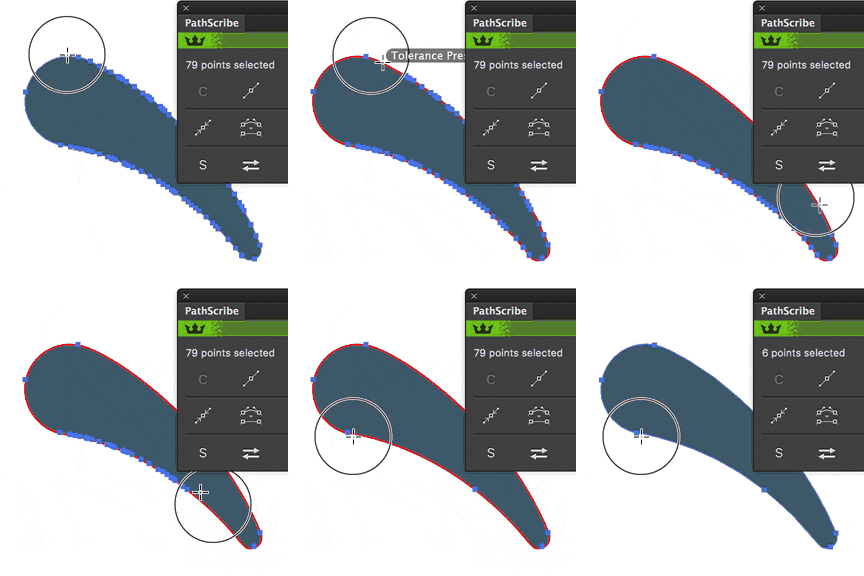
Effortlessly reduce file size and make artwork easier to edit by removing excess points, using our three dedicated tools. Either let the Smart Removal Brush automatically remove points with a pressure sensitive brush action, or use the PathScribe panel to Smart Remove Selected Points or Remove Duplicate Points. Both intelligently remove points with one press of a button whilst working hard to maintain the path shape.

Smart point removal brush in Illustrator

Extend paths / Reposition points

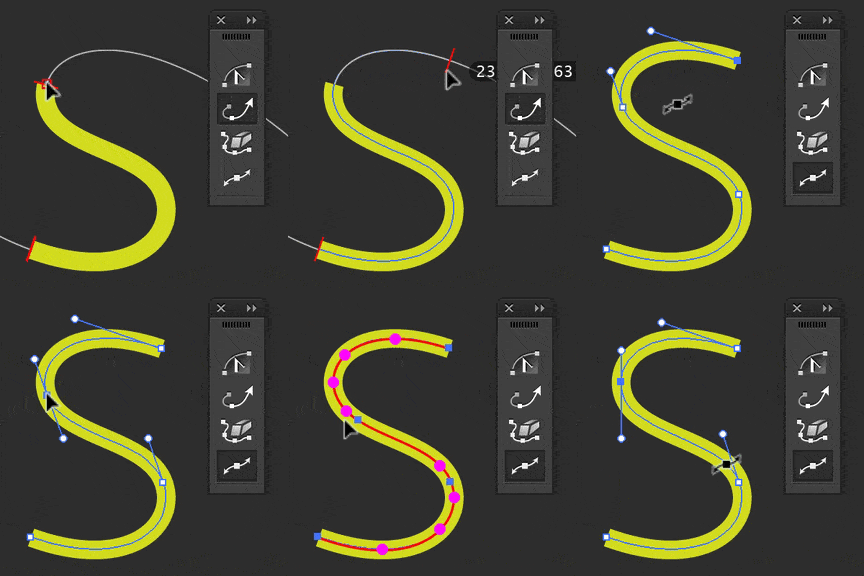
Highly requested from designers, the Reposition Point Tool allows you to slide a point along a path whilst working to maintain the path shape, with annotations to show you the optimal clockwork point placement. Another favorite particularly with typographers, fashion designers and technical illustrators is the Extend Path Tool, which allows designers to extend or trim paths to exact lengths or intersections.These stand alone tools both work in the same way, simply click-and-drag your chosen point.

Extend paths and reposition points

Create & edit shapes

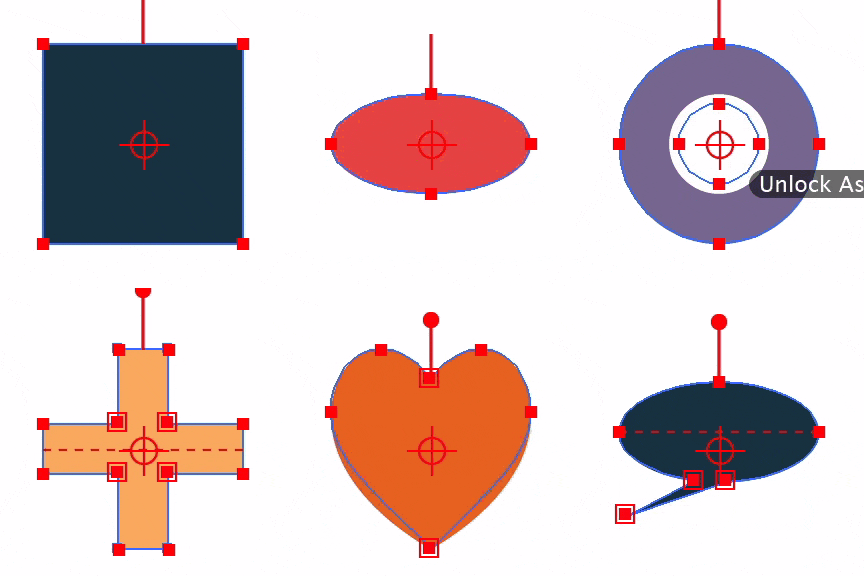
Use one tool to create a wide range of shapes from squares, gears to hearts. Enter specific values into the Dynamic Shapes panel or simply click-and-drag the shape annotations to edit segments and sides, true shape origin, height, width and diameter, corner radius and slice angles.

Compatible with text areas, clipping masks, within Live Paint artwork and can have live effects applied to them whilst remaining dynamic. One press of a button converts all basic geometric shapes to/from dynamic.

Create and edit common shapes

Live Effect Building Blocks

“Building Blocks” is our phrase for effects that you can use in a wide variety of scenarios, not just to create a single resultant style (unlike, say, AG Block Shadows, which has a singular purpose). From AG Corners to the Path Visualizer, you can create non-destructive graphic styles that work on closed or open paths, and even live type.

Click here to head to our YouTube channel and save the Live Effect Building Block Playlist to your library!

joe hisaishi kikujiro summer

How you can get started

Real-Time Drawing support is here

25 tools, across 6 Astute Graphics plugins, now support Adobe’s Real-Time Read more » joe hisaishi kikujiro summer

Draw in Illustrator with Yes I'm a Designer

If you love drawing in Adobe Illustrator, you’ll want to check out this Read more »

Digital weave effect with AG Transform

This tutorial outlines a procedure for creating a "Digital Weave" Read more »

While Joe Hisaishi is synonymous with the epic, fantasy-laden worlds of Studio Ghibli ( Spirited Away , My Neighbor Totoro ), “Summer” stands as a unique, minimalist masterpiece in his discography. It is a piece that requires no knowledge of Japanese cinema to understand, yet it captures the film’s entire emotional arc in less than four minutes. This article explores how a simple piano motif became one of the most beloved instrumental pieces of the 21st century.

Three reasons for its enduring popularity:

Here’s a comprehensive review of Joe Hisaishi’s “Summer” from the film Kikujiro (1999), covering its composition, emotional impact, cultural legacy, and technical qualities.

Summer (Joe Hisaishi) Sheet Music for Piano (Solo) - MuseScore.com

Critics often compare Hisaishi to Philip Glass or Ryuichi Sakamoto. While Glass uses repetition to create a trance state, Hisaishi uses repetition to build a narrative. In “Summer,” the A-section repeats four times, but each time, the dynamic shifts slightly.