

product description

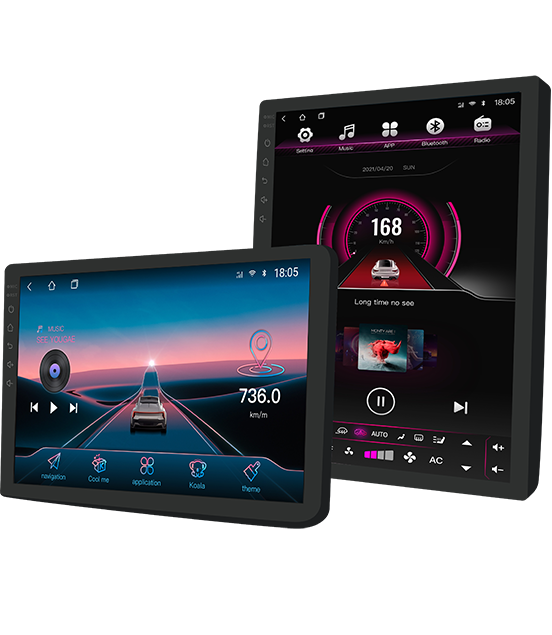
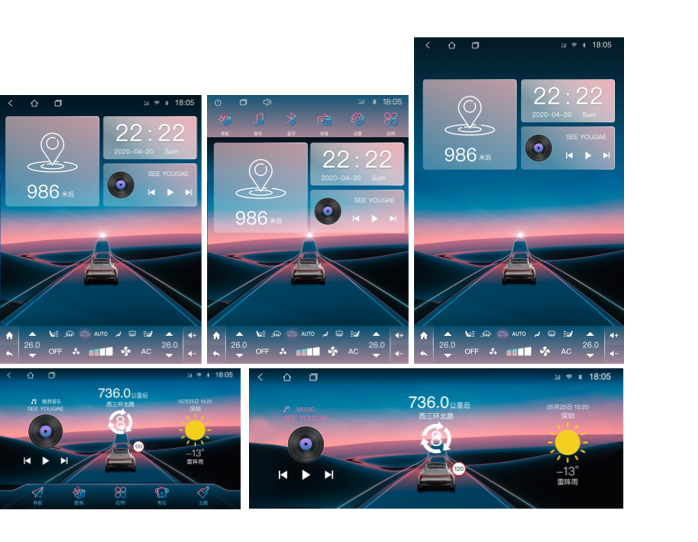
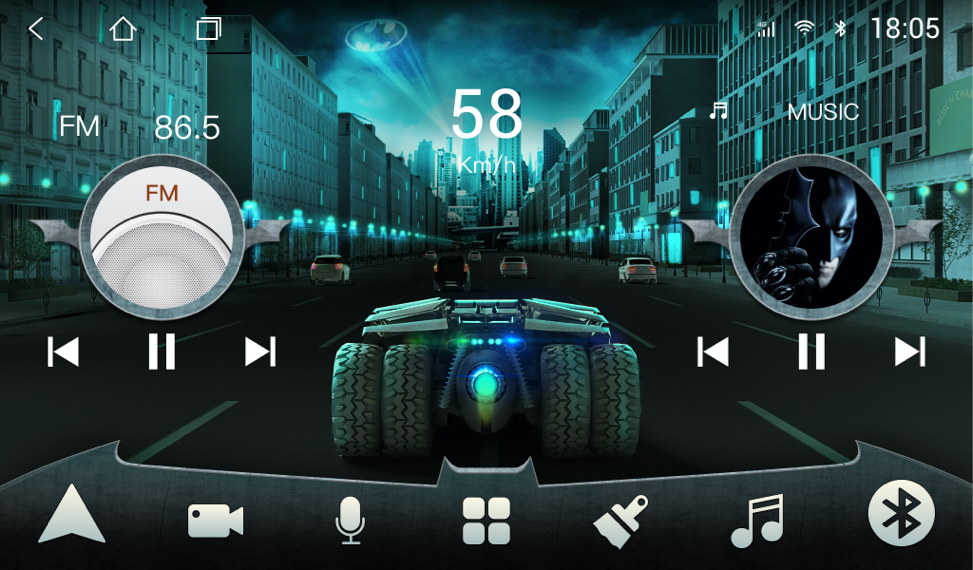
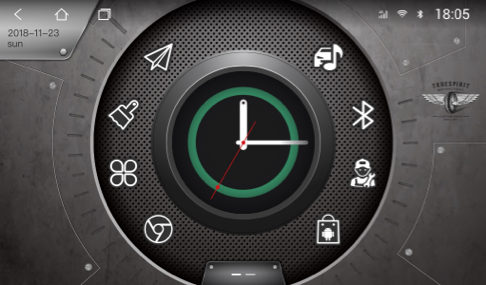
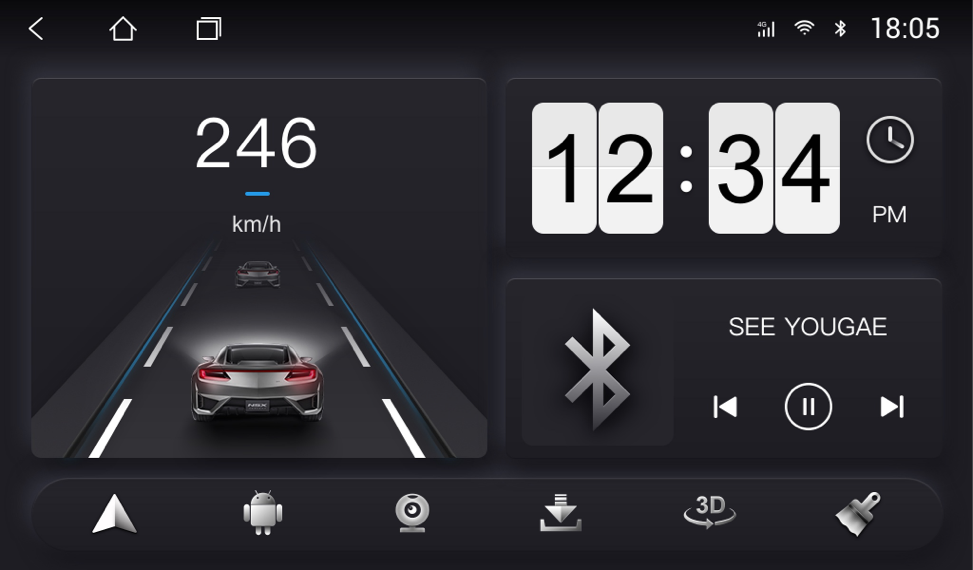
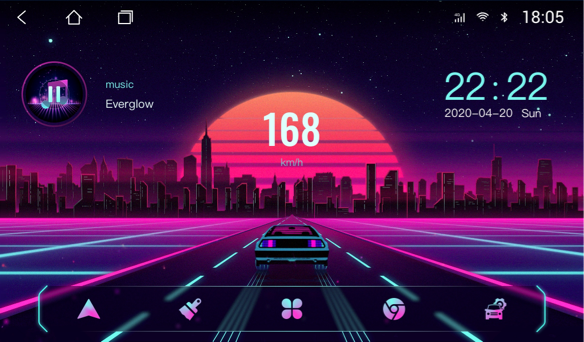
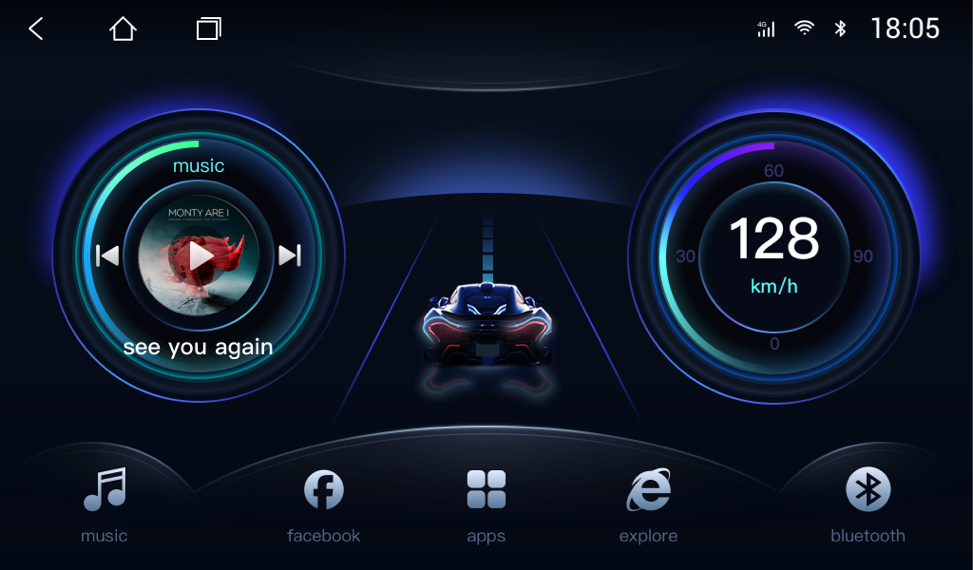
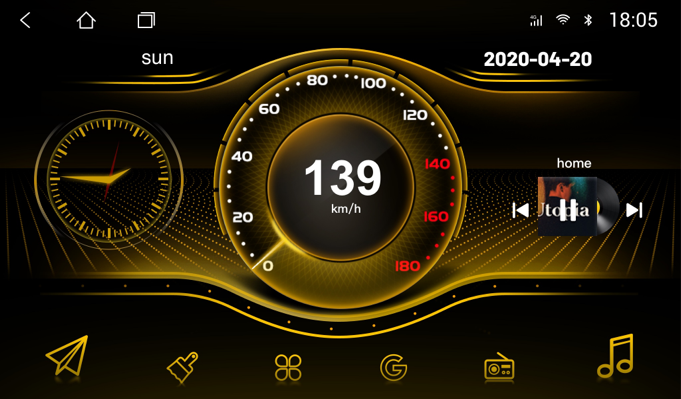
Not limited to a single theme framework, create 9 types of themes with different styles, there is always one that suits your taste!

Of course it's more than just looking good! When you drive on the road, you will find that the theme has rich dynamic effects, such as driving, instrumentation, ADAS, weather, etc., is it very interesting?

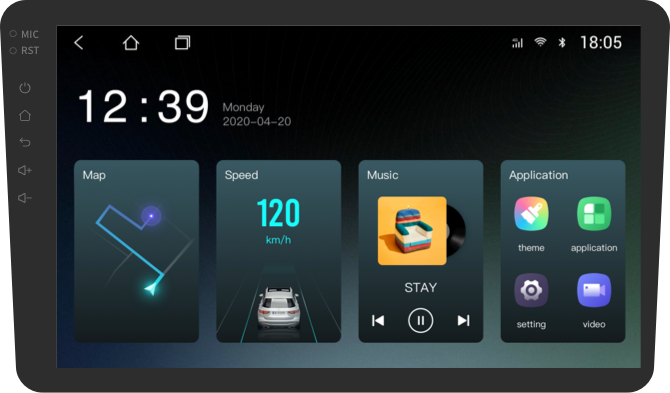
The shortcut icons on the desktop can be customized in style and function, and operate in the way you are used to!

product description
product description
Currently suitable resolutions are as follows:
Landscape contains: 1024x600、1024x768、1280x800、1280x480、2000x1200
Vertical screen includes: 768x1024、800x1280、1080x1920
If your car is different, it will use close resolution by default
Cars of Dingwei solution can use all the functions of the theme software, but some of the functions of cars of other solution providers are not available.

In addition to a single purchase, you can also


Use experience
In the , this is taught using the Cauchy equation :
[ \Delta E = h f = \frach c\lambda ]
Blue light (shorter (\lambda)) bends more than red light (longer (\lambda)). As white light enters a gem, it is fanned out into spectral colors. When these colors exit the top of the stone, you see
At first glance, a gemstone is a symbol of wealth, love, or beauty. To a physicist, however, a polished gem is a masterclass in optics, quantum mechanics, and solid-state physics. Why is a diamond so brilliant? Why is a ruby red? Why does an opal flash rainbow colors? The answers lie not in chemistry alone, but in how light interacts with periodic atomic structures.
In corundum (Al₂O₃), pure crystals are colorless. "Ruby" is corundum + trace Chromium (Cr³⁺). Chromium ions sit in the aluminum lattice. When white light hits the gem, the Cr³⁺ ions absorb specific wavelengths (green/blue) to excite electrons from the ground state to an excited state.
The primary focus of AGE18A is . When light enters a gemstone, it undergoes several physical transformations: How GEMS work | Optical properties explained
Weekly update
In the , this is taught using the Cauchy equation :
[ \Delta E = h f = \frach c\lambda ]
Blue light (shorter (\lambda)) bends more than red light (longer (\lambda)). As white light enters a gem, it is fanned out into spectral colors. When these colors exit the top of the stone, you see
At first glance, a gemstone is a symbol of wealth, love, or beauty. To a physicist, however, a polished gem is a masterclass in optics, quantum mechanics, and solid-state physics. Why is a diamond so brilliant? Why is a ruby red? Why does an opal flash rainbow colors? The answers lie not in chemistry alone, but in how light interacts with periodic atomic structures.
In corundum (Al₂O₃), pure crystals are colorless. "Ruby" is corundum + trace Chromium (Cr³⁺). Chromium ions sit in the aluminum lattice. When white light hits the gem, the Cr³⁺ ions absorb specific wavelengths (green/blue) to excite electrons from the ground state to an excited state.
The primary focus of AGE18A is . When light enters a gemstone, it undergoes several physical transformations: How GEMS work | Optical properties explained